
Choosing a hook and loop sanding disc is not only a question of grit. The backing, disc size, hole pattern and abrasive all affect how the disc fits the tool, handles the workpiece and supports the required finish.
For distributors, private-label buyers and industrial purchasers, a useful specification starts with the sanding job and the machine. This guide explains what to confirm before comparing samples or placing a bulk order.
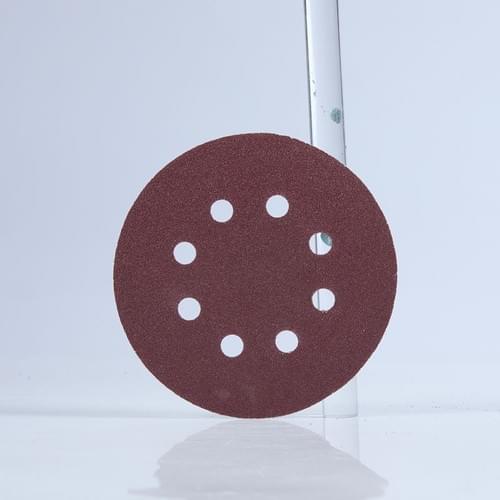 Paper-backed sanding discs
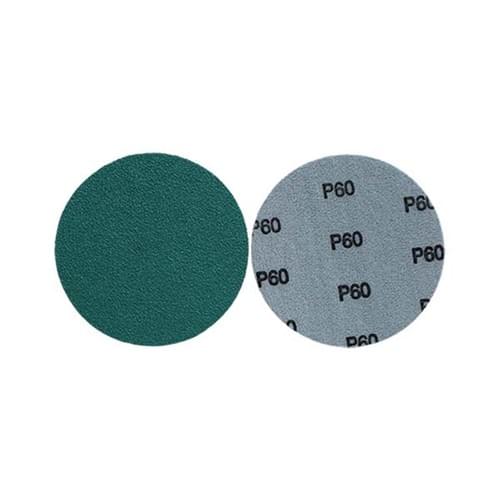 Film-backed sanding discs
Start With the Sanding Job
Describe the workpiece and the operation before selecting a disc. “Sanding disc for metal” is too broad for a useful quotation. Specify the material, whether the task is leveling, surface preparation or finish refinement, the required surface condition and the sander or backing pad in use.
These details help separate a general-purpose disc from a product better suited to a repeat operation, a finish-sensitive surface or a particular machine setup. They also help avoid testing a disc with the wrong diameter or dust-hole layout.
| Question to answer | Why it matters |
|---|---|
| What is the workpiece? | Wood, metal, coating, filler, plastic and composite surfaces may require different abrasive and backing choices. |
| What must the disc do? | Initial leveling, defect removal, surface preparation and final refinement need different grit ranges and acceptance standards. |
| Which tool and backing pad are used? | Diameter, hook-and-loop interface, dust-hole layout and permitted speed must be compatible with the equipment. |
| What counts as an acceptable result? | The target scratch pattern, coating process or next manufacturing step determines whether the sanding result is suitable. |
Choose the Backing Before You Compare Price
The backing affects flexibility, tear resistance, surface conformity and the way the disc feels in use. REX lists both paper-backed and PET film-backed hook and loop sanding disc series, so buyers can begin by selecting the backing family that best fits the intended task.
| Backing family | Where to begin evaluating | What to confirm |
|---|---|---|
| Paper-backed | A practical starting point for general-purpose sanding and surface preparation. | Paper weight, abrasive, grit, diameter, hole pattern and the finish required after sanding. |
| Film-backed | A starting point when a flexible PET film backing and controlled surface preparation are relevant to the job. | Abrasive type, grit, disc size, dust extraction layout and the required scratch pattern. |
Do not use the backing name alone as a performance claim. Two discs with the same backing can still differ in abrasive, bond, coating, grit and hole layout. Compare complete specifications and test the candidates on comparable workpieces.
See REX aluminum oxide paper sanding discs for general-purpose wood, metal and surface-preparation applications, or review REX aluminum oxide film-backed sanding discs for the film-backed range.
Use Grit as a Process Step, Not a Standalone Purchase Item
Lower grit numbers are coarser; higher grit numbers are finer. A useful grit choice depends on the initial surface, the amount of material to remove and the condition required for the next step. The correct sequence is usually more important than choosing one “best” grit.
| Process stage | Typical grit direction | What to inspect |
|---|---|---|
| Leveling or significant defect removal | Begin with a coarser grit that removes the required material without unnecessary damage. | Removal rate, heat, surface damage and whether the subsequent steps can remove the scratch pattern. |
| Surface preparation | Move to an intermediate grit appropriate to the coating, assembly or finishing process. | Uniformity and whether previous scratches have been adequately refined. |
| Finish refinement | Use finer grits in controlled steps until the target surface is reached. | Scratch consistency, remaining defects and compatibility with the final finish. |
Abrasive manufacturers commonly emphasize that holes, backing, coating and the correct grit work together. For example, Norton describes its hook-and-loop product specifications with variations in abrasive, backing and vacuum-hole arrangement, not grit alone. See Norton’s technical product information.
Match the Hole Pattern to the Backing Pad
Dust extraction is a system: the disc, backing pad, sander and extraction equipment have to work together. A disc with holes that do not align with the pad may reduce the intended extraction performance and can complicate a fair sample comparison.
Before ordering, confirm the disc diameter, number and layout of holes, the backing-pad pattern and whether a non-patterned mesh option is required. Do not assume that two discs of the same diameter fit the same pad in the same way.
Hole patterns do not automatically make a disc “dust-free.” They are part of a compatible extraction setup. Dust-control needs and applicable safety requirements should be assessed for the actual material and workplace.
Select the Abrasive for the Material and Workload
REX lists aluminum oxide, zirconia, silicon carbide and ceramic options across its hook-and-loop sanding-disc range. The abrasive is one selection factor alongside backing and grit.
- Aluminum oxide: a general-purpose candidate to evaluate for wood sanding, metal sanding and surface preparation, depending on the selected disc.
- Zirconia: a candidate for metal sanding, deburring and automotive surface preparation in the listed paper- and film-backed ranges.
- Ceramic: a candidate where the selected product is intended for consistent metal sanding and professional surface preparation.
- Silicon carbide: select according to the specific workpiece and product specification; confirm the applicable series before quoting.
These are product-family directions, not a universal ranking. The material, task and full disc construction decide the final choice. For example, you can review REX zirconia film-backed sanding discs and REX ceramic film-backed sanding discs before requesting an application-specific quotation.
Confirm the Specification Before a Bulk Order
- Workpiece material and current surface condition.
- Operation and required finished surface.
- Sander model, backing-pad diameter and dust-hole layout.
- Required disc shape, size and grit or grit sequence.
- Preferred backing and abrasive, if already known.
- Estimated quantity, packaging and private-label requirements.
REX’s listed hook-and-loop range includes round discs in 100, 115, 125, 150, 180 and 225 mm for several product families. Film-backed green and purple series are listed in 125 and 150 mm; purple film is also listed as a 70 × 12 m laser roll. The exact available combination still depends on the material and grit, so quote against the required SKU rather than treating the full range as one universal specification.
For a complete range overview, see REX specifications and applications. Confirm hole patterns, backing and all other product details for the selected item before placing an order.
How to Evaluate Samples Fairly
Test samples against the same workpiece, machine, backing pad and acceptance standard. Record the full specification of each sample, including backing, abrasive, grit, size and hole pattern. Otherwise, the result does not show which feature caused a difference in cut, life or finish.
| Record | Why it helps |
|---|---|
| Workpiece and initial condition | Shows whether samples were compared on like-for-like material. |
| Machine, pad and extraction setup | Identifies compatibility factors that may affect the result. |
| Time and disc consumption | Helps compare output instead of unit price alone. |
| Surface result and rework | Shows whether the sanding step creates additional work before the next process. |
Repeat the test where practical and retain the range of results. Do not present one disc or one best result as proof of typical performance.
Frequently Asked Questions
Should I choose paper-backed or film-backed sanding discs?
Start with the job, backing-pad setup and required surface. Paper-backed discs are a useful general-purpose starting point. Film-backed discs are worth evaluating where the listed PET film construction and controlled surface preparation suit the operation. Confirm the complete product specification before ordering.
Does the same grit produce the same finish on every disc?
No. Grit is only one variable. Abrasive type, backing, coating, disc condition, machine and operator technique can change the result. Evaluate the actual finish on the workpiece.
Why is the hole pattern important?
The disc should match the backing pad and extraction setup. A diameter match alone does not confirm that the hole layout is appropriate.
What should a distributor confirm before private-label ordering?
Agree on the full approved sample specification, product identification, packaging, labeling, batch identification and the terms that keep future orders consistent with that sample.
Need help matching a disc to your sanding process? Contact REX with your material, task, tool setup, required size and grit, and estimated quantity to discuss a suitable specification.